


If you are searching for a guide to adjustable shocks for performance cars, you are in the right place. This article will walk you through the basics, benefits, and setup tips for adjustable shocks. Whether you want better launches or improved handling, knowing how to tune your suspension is essential.
In the world of high-performance driving, suspension is not just about comfort. Your shocks can make a huge difference in traction, cornering, and how your car handles power. In this guide, you will learn how adjustable shocks can help you launch harder and more consistently.
Adjustable shocks are one of the most effective tuning tools available for street or track cars. With the right know-how, you can set up your car to match road and racing conditions. Let’s dive into what adjustable shocks are and how to use them for the best results.
What Are Adjustable Shocks and How Do They Work?

Adjustable shocks, also called adjustable dampers, are a key component in any performance suspension setup. Unlike standard shocks, these allow you to control how quickly your suspension compresses and rebounds. In other words, you choose how soft or firm your ride feels. Veja tambem: Top Suspension Mods for Improved Traction: Essential Upgrades Explained.
There are usually two main types of adjustments: compression (bump) and rebound. Compression controls how fast the shock compresses when you hit a bump or launch. Rebound controls how fast it returns to its original position after compression. Many shocks have both adjustments, but some have only one. Veja tambem: Step by Step Suspension Tuning for Racing: Complete 2026 Guide.
For example, a drag racing setup may need soft compression in the rear to help transfer weight for better traction. At the same time, a road racing setup may need firmer compression and rebound to keep cornering stable. Adjustable shocks let you tailor your car to fit each scenario. Veja tambem: How to Choose the Right Sway Bar for Performance: A Practical Guide.
In addition, there are single-adjustable and double-adjustable shocks. Single-adjustable shocks let you tweak either compression or rebound, usually rebound. Double-adjustable shocks allow independent tuning of both settings. Premium setups even offer external reservoirs for more fine-tuning and heat control.
Because adjustable shocks can handle different driving needs, they are popular for car enthusiasts who want both street comfort and racing performance. However, not all shocks work for every car. It is important to research what fits your make and model.
Many brands like Bilstein, Koni, KW, and Fox offer reliable adjustable shocks. These come with user-friendly dials or knobs, so you don’t need special tools for most adjustments. For a closer look at basics, check Summit Racing’s Shock Absorber Guide.
In summary, adjustable shocks are the heart of any customizable suspension. They give you the control needed to adapt your car’s handling to your goals, whether you crave better launches or sharper cornering.
Tuning Adjustable Shocks for Traction and Launches

To get the most from adjustable shocks, you must understand how changes affect traction and launches. Traction is the grip your tires have on the road or track surface. In performance driving, how well your car can launch—or accelerate quickly from a stop—depends heavily on this grip.
First, consider your car’s weight transfer. When you launch your car, weight shifts to the rear. The right shock tuning helps manage this shift. By setting rear shock compression softer, you make it easier for weight to move rearward. This pushes the drive tires into the pavement, making for a harder, cleaner launch.
On the other hand, if shocks are set too stiff in compression, the car may not squat enough during launch. This can cause tire spin and wasted power. Setting rebound stiffer in the front helps keep the front end down, reducing power loss and keeping the car stable.
Modern adjustable shocks have click-style settings. These offer a repeatable way to track your adjustments, which is vital for consistency. Therefore, always record your settings and changes. For example, if you find your best launch at four clicks from soft on rear compression and six clicks from stiff on front rebound, keep those notes. You can adjust later based on testing.
In drag racing, racers often set rear shocks soft in compression, but slightly firmer in rebound. This setup helps the wheels stay planted after the initial launch. In autocross or circuit racing, stiffer settings can help control rapid weight shifts in corners, but watch out for excessive bounce or harshness.
In addition, tire choice and pressure strongly interact with shock tuning. Softer shocks won’t make up for low-grip tires, and over-stiff shocks can overload even the best rubber. Start with manufacturer recommendations and adjust in small steps.
Remember, traction is not just about power—it’s about putting power to the ground efficiently. That’s why top racers spend so much time on shock and spring setup. For detailed technical advice on weight transfer, see Grassroots Motorsports’ Suspension Tuning Guide.
Real-World Examples: Adjustable Shocks in Action

Let’s look at some practical examples where adjustable shocks made a big impact. In 2026, many performance cars—even from the factory—offer adjustable shocks as part of sport or track packages. This includes models like the Ford Mustang GT, Chevrolet Camaro SS, and Subaru WRX STI.
For street use, drivers often complain about a ride that is too harsh on rough roads. By softening the settings on their shocks, they gain comfort without sacrificing handling during spirited driving. On track days, they crank up the stiffness. This stops the car from rolling too much in corners and helps keep tire contact patch flat.
Take a drag racing Mustang. With stock shocks, the car spins on launch and loses valuable time. After swapping to double-adjustable shocks, the owner sets rear compression to 3/10 (soft) and rebound to 6/10 (firmer). Front shocks are set stiffer in rebound. Launch times drop by a tenth of a second, a big gain in drag racing.
In autocross, a driver with a Subaru WRX dials in slightly stiffer front compression and rebound. This change keeps the nose from diving under hard braking and improves steering response. Because of this, the car stops quicker and corners more consistently, shaving seconds off lap times.
Adjustable shocks are not just for racing. Performance daily drivers use them, too. For example, KW Variant 3 coilovers allow separate high-speed and low-speed adjustments. In city driving, drivers prefer softer compression. On highways, they use firmer settings for stability during high-speed maneuvers.
Because of the variety in available shocks and car setups, the tuning process is never exactly the same for everyone. However, the core approach—adjust, test, record, then refine—remains consistent.
Suspension Setup: Finding the Ideal Balance
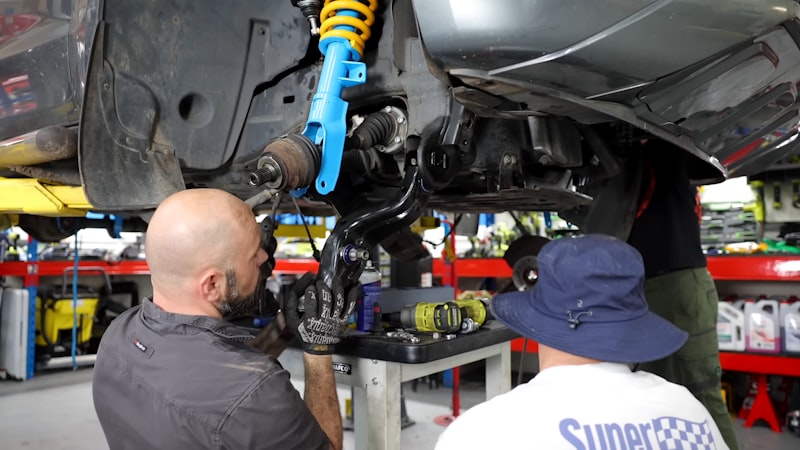
Suspension setup is about balance. Adjustable shocks work with springs, bushings, sway bars, and most importantly—tires. Each component affects how your car puts down power and handles corners.
The first step is always to set your ride height and springs to fit your driving goals. Too low or too stiff can cause issues. Once that’s sorted, you can use your shocks for fine-tuning. Start with the manufacturer’s recommended “baseline” settings for track or street.
Testing is key. Make one adjustment at a time, and test before making another change. For example, if you want better traction at launch, soften the rear compression by one click. Test the launch, record the result. If you see too much squat or start to bottom out, return to the previous setting or increase compression.
Key things to watch for during testing:
- Excessive squat or wheel hop at launch (may need stiffer rebound or less compression)
- Too much front end lift at launch (stiffen front rebound)
- Poor traction during high-speed cornering (adjust compression and rebound at both ends)
- Bouncing or “floaty” ride after bumps (increase rebound)
One often overlooked factor is temperature. Shocks get hot during track sessions, which can change their damping. Some advanced shocks have external reservoirs to control heat better, but most users should just allow time to cool between runs for consistency.
Nevertheless, don’t forget alignment. A good shock setup works best with proper camber, toe, and caster angles for your use case. Tire pressures also change how shocks behave. Always check and adjust all elements for best results.
In summary, the best suspension setup combines correct shock tuning with matched tires, good alignment, and proper ride height.
Adjustable Shocks: Maintenance and Common Mistakes

Maintaining your adjustable shocks is as important as tuning them. Like any suspension part, shocks wear out over time, especially with frequent adjustments and hard driving. Regularly check for leaks, abnormal noises, and smoothness in adjustment dials.
Dirt, salt, and debris can cause adjusters to seize. Therefore, inspect and clean adjustment knobs every oil change. Use a light spray lubricant if recommended by the shock manufacturer. In regions with harsh winters, wash shock bodies frequently to prevent salt buildup.
A common mistake is making too many changes at once. For accurate feedback, only adjust one variable per test. Otherwise, you may not know which change gave you the result.
Another mistake is setting shocks too stiff. While a firm setup can feel sportier, too much stiffness can reduce grip, make the ride harsh, and stress suspension bushings. In fact, the fastest setups are often not the stiffest.
For those using their cars for both street and track, remember to return to softer settings after each track day. Street conditions require more comfort and less stiffness. Forgetting to do this can lead to premature shock and tire wear.
Finally, always check the manual or install guide for your specific shocks. Not all brands work the same way, and incorrect adjustments can damage the shock or void the warranty. If you need to replace worn shocks, consider a rebuild from the manufacturer.
Conclusion

Mastering adjustable shocks is one of the best investments for performance car enthusiasts. As covered in this guide to adjustable shocks for performance cars, proper tuning can unlock better launches, stronger traction, and sharper handling. Remember, start with the basics: understand your settings, test changes one at a time, and always match your suspension setup to your driving goals.
For the best results, keep detailed records and revisit your settings as conditions change. Whether you are chasing drag strip glory or carving corners, adjustable shocks can help you find that perfect balance between comfort and control.
Ready to take your suspension setup even further? Explore the latest adjustable shocks and try out your own adjustments. You will feel the difference on every launch and in every turn. For more tips on suspension, tires, and traction tricks, keep reading ecredexa.com’s in-depth guides.
Leave a Reply