

Finding the recommended turbo sizes for 4 cylinder engines is key for strong, reliable drag racing results. Turbo sizing impacts power, spool speed, and durability—especially in highly tuned four-cylinder setups.
Many racers find turbo selection confusing due to the wide range of options. In addition, engine build, fuel system, and boost targets all affect the right choice. In this article, you will learn how to choose the best turbo size, see real-world examples, and explore expert tips for four-cylinder drag builds.
Whether you are starting your project or refining your setup, clear advice on turbo sizing will help you save money and avoid costly mistakes. Let’s break down every step for ecredexa.com readers focused on engine and turbo performance.
Understanding Turbo Sizing for 4 Cylinder Engines
Turbo size is not just about physical dimensions. It also covers compressor and turbine wheel specs, A/R (area/radius) ratios, and flow ratings. On four-cylinder engines, picking the right turbo affects both peak power and usable torque band.
For example, a Garrett GTX2860R is a popular option for 1.6L to 2.0L four-cylinder engines shooting for 300-400 horsepower. Smaller turbos, like the Garrett GT2554R, deliver rapid spool and response for street or autocross setups. On the other hand, larger options, such as a Precision 6262 or BorgWarner EFR 7670, suit high-boost drag builds aiming for 500+ horsepower.
Size selection for your four-cylinder depends on several factors:
- Displacement (e.g., 1.6L, 2.0L, 2.5L)
- RPM range and boost target
- Intended use (drag racing, daily driving, track)
- Supporting mods (fueling, engine internals, cams, exhaust)
- Displacement and Engine Strength: Larger displacement engines (like 2.5L) flow more air at the same RPM than smaller ones (like 1.6L). Therefore, bigger engines can efficiently use larger turbos, reducing lag.
- Desired Power Output: As a rule, each 10 lbs/min of airflow can support roughly 100 horsepower. In fact, to make 500 hp at the wheels, your turbo must flow about 50 lbs/min at your intended boost.
- RPM Range: Drag cars aiming for peak power at 8,000 rpm need a different turbo than street cars shifting at 6,500 rpm. Sizing affects the rpm where maximum boost comes in. If the turbo is too large, boost may arrive too late, harming 60-foot times.
- Boost Pressure: Higher boost needs more efficient turbos to avoid excessive heat or surge. For example, a street build running 16 psi will want a different compressor map than an all-out 35 psi drag engine.
- Fuel Type: Race fuels like E85 or methanol allow safe higher boost. Because of this, you can run a larger turbo and still have a safe, usable powerband.
- Intended Use: Drag racing often tolerates more lag since you’re launching at high rpm. However, autocross or street builds favor quick spool and low-end power.
- Supporting Mods: Upgrades like forged rods, high-flow injectors, or a standalone ECU allow for more turbo and boost. In contrast, stock internals and fueling limit safe turbo size.
- 340 hp street build, 2.0L, 15 psi, pump gas: Garrett GTX2860R or BorgWarner EFR 6758.
- 600 hp drag build, 2.0L, 28 psi, E85: Precision 6466 or Garrett G30-770.
- 200-300 HP (Street/Track/Light Mods):
- Garrett GT2554R, GT2860R, or BorgWarner EFR 6258
- Compressor: 54-60 mm
- Quick spool, wide torque band
- Suitable for daily drivers and time attack cars
- 350-450 HP (Aggressive Street/Strip Builds):
- Garrett GTX2860R, GTX3071R, Precision 5431
- Compressor: 60-71 mm
- Excellent blend of response and top end
- Common for high-boost street setups and drag cars
- 450-600 HP (Full Drag Engines):
- Precision 6262, Precision 6466, Garrett G30-660, BorgWarner EFR 7670
- Compressor: 66-76 mm
- Focused mainly on high-rpm racing use, often laggier below 4000 rpm
- 700+ HP (Extreme 4 Cylinder Builds):
- Garrett G35-1050, Precision 6870
- Compressor: 70-85 mm
- Require fully built engines, race-only setups, and advanced fueling
- Turbo: Precision 5558 (supports ~580 hp)
- Engine: Forged rods/pistons, ARP studs, multi-layer head gasket
- Fuel: 1400cc injectors, dual fuel pumps, E85
- Electronics: Standalone ECU, wideband O2, 4-bar map sensor
- Boost: 28 psi, controlled by an electronic boost controller
Choosing a turbo too large will lead to lag, making the engine less responsive. In contrast, a turbo that is too small will limit top-end power and may struggle to cool at high boost. Because of this, achieving the right balance is vital for fast, dependable ETs and consistent race wins.
Manufacturers list turbos with flow and power targets. In fact, a compressor map—showing airflow versus pressure ratio—lets you match a turbo to your engine’s needs. For a 2.0L making 400 wheel horsepower, a turbo moving about 40 lbs/min at 22 psi is typical.
In summary, understanding flow, A/R, and compressor maps will help you find your best match. You can explore real-world maps and guidelines on sites like Garrett Motion’s turbo matching library.
Key Factors Affecting Recommended Turbo Sizes for 4 Cylinder Engines
When picking a turbo for a four-cylinder drag build, several factors need attention. These include the engine’s displacement, intended boost levels, fuel used, and how you intend to use the car.
For instance, a 2.0L Honda K-series engine built for 25 psi of boost on E85 will need a different turbo than a stock-bottom-end 1.8L running 10 psi on pump gas. In addition, cam profiles and exhaust designs also shape your turbo’s ideal size and spool behavior.
The following key factors influence turbo sizing:
Let’s illustrate with a comparison:
There are many calculators available online for airflow, pressure ratio, and rpm targeting. For detailed calculations, EngineLabs offers a turbo sizing guide.
Popular Turbo Size Ranges and Their Applications
Understanding common size ranges will help you start your project with more confidence. Turbochargers are often identified by compressor wheel size (millimeters), model numbers, or flow ratings (lbs/min or cfm).
Here are some recommended ranges for different power goals on four-cylinder drag racing engines:
When choosing among these, consider your goals and what supporting parts you have. For example, a street-driven Honda Civic on a stock engine may enjoy a GT2860R for up to 350 hp on pump gas. However, a full-drag Toyota 3S-GTE running 30 psi might opt for a Precision 6466 for over 600 hp, but will need forged engine parts, big injectors, and upgraded engine management.
Turbo kit manufacturers often rate their products with clear power and displacement ranges in 2026. For example, Full-Race lists recommended engine and power ranges for each turbo in their catalogue.
Matching Turbo Size With Engine Internals, Fuel, and Reliability
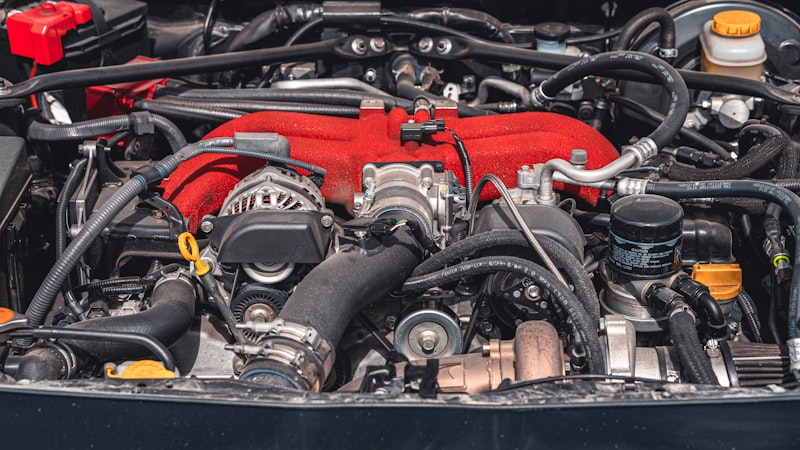
Selecting a turbo for your four-cylinder engine is only half the job. You should always match turbo size with the strength of your internal parts, your fuel system, ignition control, and boost management.
Engine Internals: Stock connecting rods, pistons, or even factory head gaskets often fail when pushed too far. Therefore, if you plan to use a turbo sized for more than 350-400 wheel horsepower, forged rods and pistons are strongly advised. In fact, many high-power builds also upgrade crankshafts, head bolts, and gaskets.
Fuel System: Running a larger turbo often means higher flow demand. Upgrades such as bigger injectors, high-flow fuel pumps, and lines are common. In addition, race fuels like E85 or methanol offer more knock resistance and cooling, allowing the engine to safely handle more boost. However, switching fuels usually requires a revised fueling map.
Ignition and Boost Control: Many four-cylinder turbo failures stem from poor ignition timing and uncontrolled boost. Using a standalone ECU, electronic boost controller, and knock sensors helps you safely push power while managing detonation. For example, ramping in boost with a solenoid keeps traction up and reduces stress on factory parts.
Turbo Manifold and Exhaust: Restrictive manifolds and exhausts can kill power and cause unnecessary heat. A free-flow turbo manifold and a high-diameter downpipe let bigger turbos breathe and make reliable horsepower. In fact, just switching from a cast-iron to a tubular turbo manifold can cut more than 200°F of underhood temp.
Cooling and Lubrication: Turbocharged drag racing engines need strong cooling. In addition, larger turbos often need better oiling. Therefore, use upgraded radiators, intercoolers, and oil feed/return systems to avoid heat-soak and bearing issues. For competition, adding an oil cooler is highly recommended.
Practical Example: Let’s say you build a 1.8L Toyota 4A-GE turbo engine for 500+ hp:
With that combo, you’ll have a reliable setup that matches your turbo size with the rest of your upgrades. On the other hand, using this turbo on a stock 4A-GE will likely result in engine failure.
Tips for Boost Control, Spool, and Track Reliability
Controlling boost is just as crucial as picking the right turbo. Proper boost management improves response and cuts down the risk of damage.
Choosing the Right Wastegate: For most 300-500 hp four-cylinder setups, a 38-44mm external wastegate is common. Larger builds may need a 50mm wastegate to prevent boost creep. As a result, exhaust pressure stays steady, and pid control is more precise.
Controlling Boost Spool: Electronic boost controllers let you ramp in power, which is key for FWD drag engines that lose traction off the line. In addition, staged boost lets you use low boost at launch and build more later in the run.
Turbo Blanket and Heat Management: Wrapping your turbo in a shield or blanket keeps heat in the turbo housing. This speeds up spool and protects nearby wiring and sensors. Upgraded intercoolers also drop intake air temps for more stable power runs.
Testing and Data Logging: Always use wideband oxygen sensors and log intake temps, oil temps, and knock when tuning your turbo setup. In fact, many engine failures in 2026 happen due to bad fuel or missed knock events.
Example Track Strategy: A 2.0L Mitsubishi 4G63 on a Precision 6466 may reach peak boost near 5,100 rpm. By adjusting launch rpm, staging limiter, and boost-by-gear, racers get quicker ETs and avoid torque spikes that break driveshafts. In addition, setting up a safe boost cut limit on the ECU prevents overboost in case of boost control failure.
These strategies all help you safely run the right turbo for your four-cylinder drag build and can mean the difference between setting a personal best and blowing an engine.
Conclusion
Recommended turbo sizes for 4 cylinder engines depend on your power goals, supporting parts, and intended use. A matched setup brings both strong performance and reliability. In fact, size choice may be the most important decision in any drag racing engine build.
Start by choosing a turbo that matches your engine displacement and planned horsepower. Check that your fuel system and internals are up to the task. In addition, invest in good boost control and monitoring to maximize results.
In summary, picking the right turbo will help you win races, break personal records, and avoid costly engine damage. For detailed maps and further learning, visit sites like Garrett Motion or EngineLabs.
For more turbo sizing tips and in-depth drag racing guides, stay connected with ecredexa.com. Start your project smart and see the results on the strip.
Leave a Reply